
Also referred to as a dissection microscope, stereo microscopes are used for the 3D viewing of large objects such as rocks, fossils and electronic parts. Stereo microscopes produce an erect image composed of two separate optical paths, with each eye receives a slightly different image which is then processed by the brain to give the perception similar to what one would experience with normal eyesight.
A stereo microscope has a lower magnification (7X to 80X magnification) than a compound microscope (400X/1000X). However, the large field depth means more of the specimen in focus in 3D.
There are two options for magnification on stereo microscopes: step magnification (pre-set increments) or zoom magnification (continuously magnify throughout the specified range).
Top light: incident light (round or square shaped housing) is diagonally adjustable so that light shines directly onto the stage plate. Incident lighting is used for opaque specimens.
Bottom light: transmitted light is used for translucent specimens.
Lighting can be used individually or simultaneously for best results.
For applications where industrial stereo microscopes are required, a base, arm stand and an illuminator will need to be selected. Take into consideration which of each will better suit your needs. There are several different types of each. Here are some of the choices for Arms & Stands:
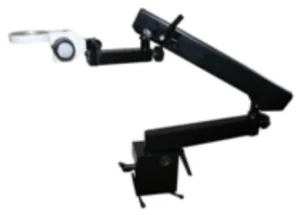
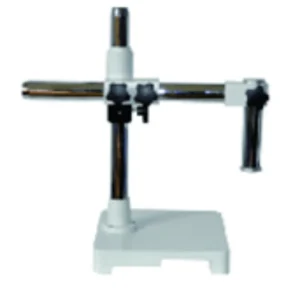
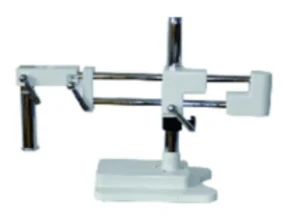
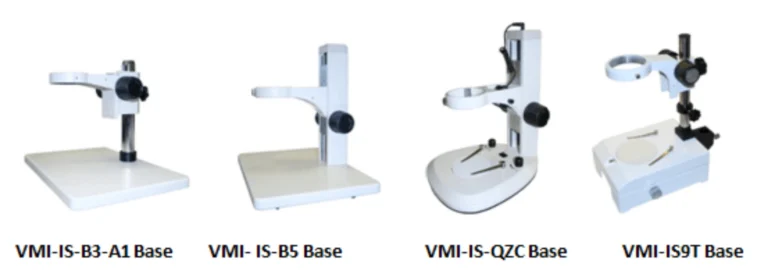
With Stereo Imaging, the correct illuminator is vital for proper investigation and inspection of specimens. Cool running illumination, such as LED, is the ideal choice as heat can cause irreversible damage, altering the specimen’s appearance or structure.
Based on what type of application you will be using your Industrial Stereo Microscope for, choose between a variety of LED Ring Lights, Fluorescent Ring Lights and Fiber Optic Lights. Choose between gooseneck, spotlight or ring designs.